User Management Tool (UMT)
[Overview]
The Context
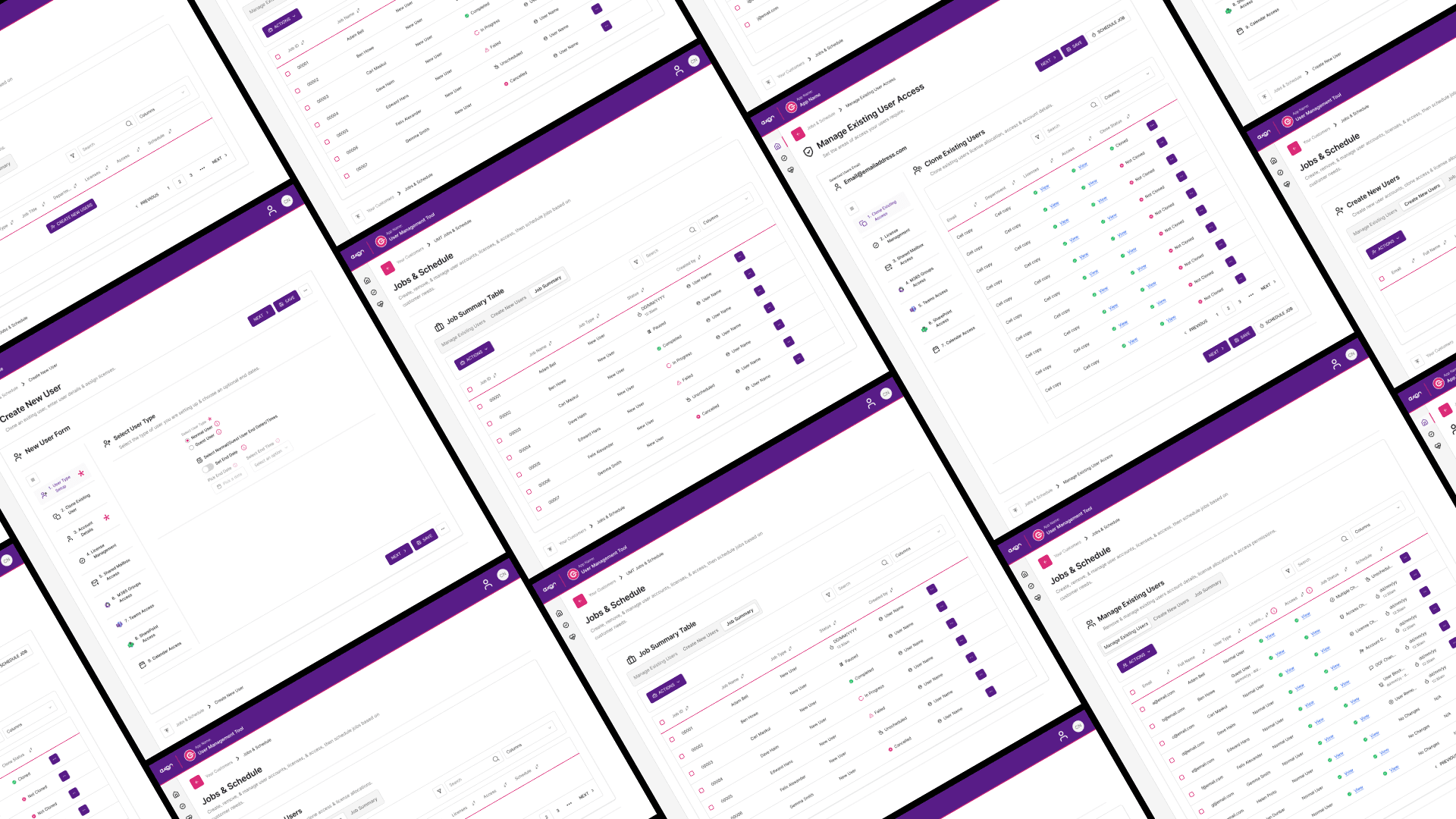
As Lead UX Designer at a B2B software company serving SMB Managed Service Providers (MSPs), I led the UX strategy, research, and design of the User Management Tool — a product created to automate routine admin tasks like onboarding, account changes, and permissions. The tool aimed to reduce engineer workload, improve operational scalability, and serve as a core component in a growing SaaS ecosystem tailored for the MSP market.
The Context
As Lead UX Designer at a B2B software company serving SMB Managed Service Providers (MSPs), I led the UX strategy, research, and design of the User Management Tool — a product created to automate routine admin tasks like onboarding, account changes, and permissions. The tool aimed to reduce engineer workload, improve operational scalability, and serve as a core component in a growing SaaS ecosystem tailored for the MSP market.
Problem Statement
MSP engineers were overwhelmed by repetitive user management tasks: These daily tasks — onboarding, permission updates, and account modifications — drained time and diverted focus from higher-value support work.
Manual processes created bottlenecks: Without automation, engineers struggled to keep up with user management tickets, especially during peak periods or client staff changes. This slowed service, impacted client satisfaction, and hindered MSP scalability.
The result: Reduced efficiency, increased overhead. Routine tasks consumed engineering time, forced unnecessary hires, and threatened profit margins. A scalable, user-centred automation solution was urgently needed.
Problem Statement
MSP engineers were overwhelmed by repetitive user management tasks: These daily tasks — onboarding, permission updates, and account modifications — drained time and diverted focus from higher-value support work.
Manual processes created bottlenecks: Without automation, engineers struggled to keep up with user management tickets, especially during peak periods or client staff changes. This slowed service, impacted client satisfaction, and hindered MSP scalability.
The result: Reduced efficiency, increased overhead. Routine tasks consumed engineering time, forced unnecessary hires, and threatened profit margins. A scalable, user-centred automation solution was urgently needed.
Skills Demonstrated
UX Research & Synthesis
SaaS Product Design
Research-Led Design
Process Automation
Scalable Systems
[Impact]
Over 50% Efficiency Gain
Reduced handling time from 2hrs to under 1hr by streamlining core workflows like onboarding and permission updates.
Aligned MVP Scope to Real User Pain Points
Transformed qualitative insights from 12 engineer interviews into empathy maps, personas, and a functional requirements doc that secured leadership buy-in — accelerating MVP sign-off and reducing scope negotiation cycles by 50%.
Streamlined Delivery with a Modular Design System
Created a reusable, atomic design system that reduced UI assembly time by 30% and improved design-to-dev handoff quality — enabling faster iterations across the growing SaaS suite and ensuring visual consistency at scale.
[My Process]
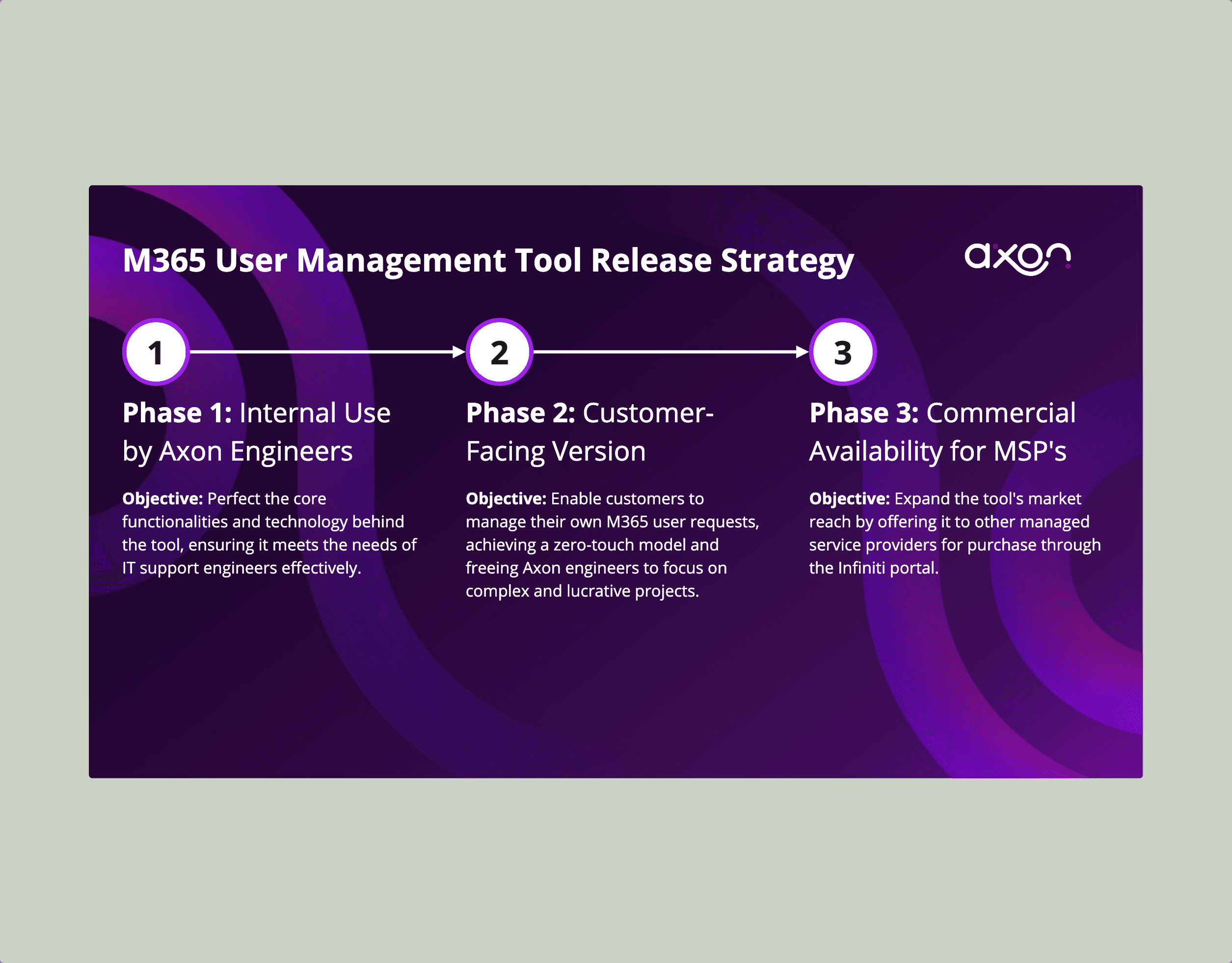
1. Strategic Alignment
• Contributed to one- and five-year business growth plans, aligning UX vision to commercial objectives.
• Helped define UMT’s role in reducing ticket volume and increasing service scalability.
• Mapped out a phased release strategy, ensuring early versions delivered tangible value and fit within development constraints.
1. Strategic Alignment
• Contributed to one- and five-year business growth plans, aligning UX vision to commercial objectives.
• Helped define UMT’s role in reducing ticket volume and increasing service scalability.
• Mapped out a phased release strategy, ensuring early versions delivered tangible value and fit within development constraints.
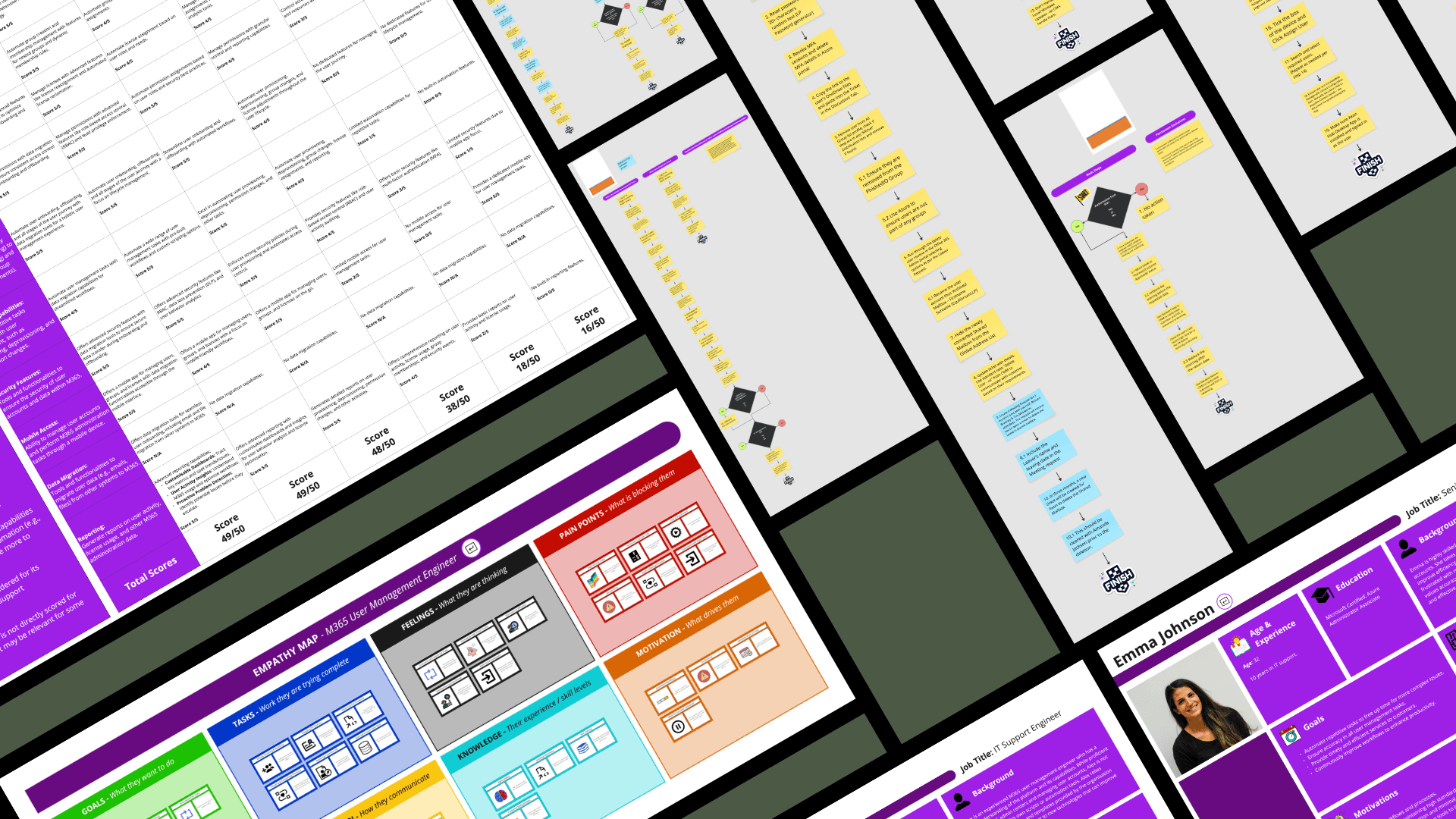
2. User Research & Workflow Mapping
• Conducted depth interviews with support engineers to identify pain points, edge cases, and workflow inefficiencies.
• Benchmarked competitor tools to gather best practices.
• Created process maps, empathy maps, and personas based on user behaviour and context.
• Defined four core ticket types to guide MVP functionality: User Creation, Access Permissions, Account Modification, User Removal.
• Introduced the concept of a “job scheduler” after uncovering the need to assign future-dated tasks.
2. User Research & Workflow Mapping
• Conducted depth interviews with support engineers to identify pain points, edge cases, and workflow inefficiencies.
• Benchmarked competitor tools to gather best practices.
• Created process maps, empathy maps, and personas based on user behaviour and context.
• Defined four core ticket types to guide MVP functionality: User Creation, Access Permissions, Account Modification, User Removal.
• Introduced the concept of a “job scheduler” after uncovering the need to assign future-dated tasks.
3. Design Execution & Testing
• Designed intuitive user flows for all key scenarios, ensuring clarity in navigation and task execution.
• Created a new Figma-based design system using Atomic Design principles to support modularity and reusability.
• Ran iterative usability testing with engineers, incorporating feedback to improve interaction patterns, labelling, and information hierarchy.
• Simplified complex workflows while ensuring flexibility for different client configurations.
3. Design Execution & Testing
• Designed intuitive user flows for all key scenarios, ensuring clarity in navigation and task execution.
• Created a new Figma-based design system using Atomic Design principles to support modularity and reusability.
• Ran iterative usability testing with engineers, incorporating feedback to improve interaction patterns, labelling, and information hierarchy.
• Simplified complex workflows while ensuring flexibility for different client configurations.
4. Developer Collaboration & MVP Delivery
• Delivered annotated UI and flow documentation tailored for developer needs.
• Created a design system that doubled as a build reference, streamlining handoff and reducing development time.
• Prioritised features based on research-led impact, balancing immediate value with technical feasibility.
4. Developer Collaboration & MVP Delivery
• Delivered annotated UI and flow documentation tailored for developer needs.
• Created a design system that doubled as a build reference, streamlining handoff and reducing development time.
• Prioritised features based on research-led impact, balancing immediate value with technical feasibility.
5. UMT Job Scheduler
Designed to address workflow bottlenecks, the job scheduler allows engineers to assign future-dated tasks at the time of ticket creation. This innovation was grounded in user interviews revealing task pile-ups and delayed execution. The feature immediately reduced backlog pressure and became one of the tool’s most praised capabilities during usability testing.
5. UMT Job Scheduler
Designed to address workflow bottlenecks, the job scheduler allows engineers to assign future-dated tasks at the time of ticket creation. This innovation was grounded in user interviews revealing task pile-ups and delayed execution. The feature immediately reduced backlog pressure and became one of the tool’s most praised capabilities during usability testing.
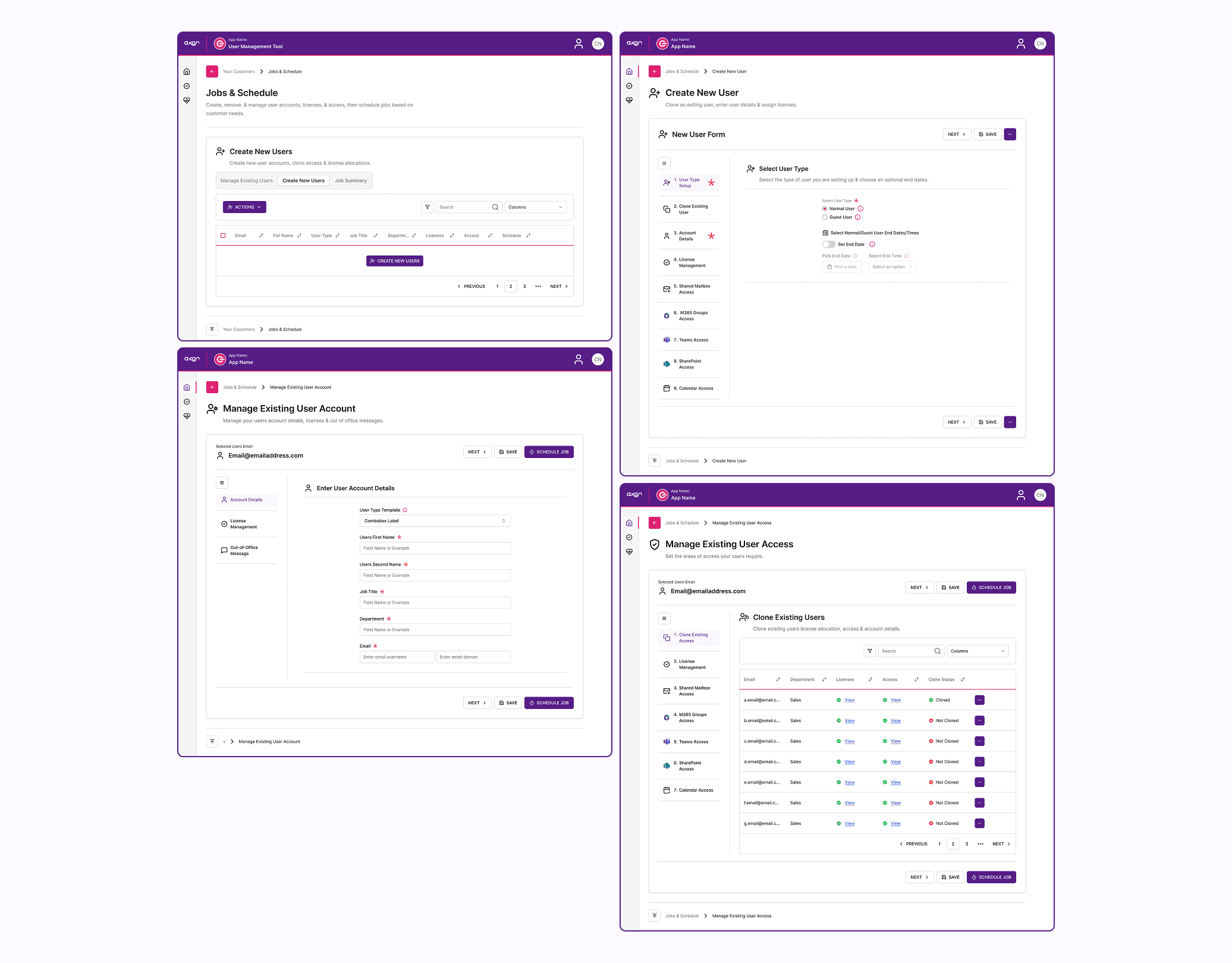
6. Modular User Flow for Standard Tasks
By analysing hundreds of support tickets, I identified four recurring user management patterns. These became the backbone of the UMT’s modular workflow templates—streamlining onboarding, permission changes, account updates, and user removals. This approach cut unnecessary decision-making and ensured engineers could process tickets in under 60 minutes.
6. Modular User Flow for Standard Tasks
By analysing hundreds of support tickets, I identified four recurring user management patterns. These became the backbone of the UMT’s modular workflow templates—streamlining onboarding, permission changes, account updates, and user removals. This approach cut unnecessary decision-making and ensured engineers could process tickets in under 60 minutes.
[Key Learnings]
Design Anchored in Business Strategy
Contributing to leadership planning sessions reinforced the value of aligning UX with long-term business objectives — not just short-term delivery.
Research-Driven MVP Clarity
By transforming user interviews into actionable artefacts, I was able to steer feature prioritisation and shift stakeholder decisions from assumption-led to insight-led.
Systems Thinking for Scale
Creating a modular design system early ensured visual consistency and development speed across the SaaS suite — critical for a growing product portfolio.
[Persona]
Jhon Roberts
Marketing Manager
Content
Age: 29
Location: New York City
Tech Proficiency: Moderate
Gender: Male
[Goal]
Quickly complete purchases without interruptions.
Trust the platform to handle her payment securely.
Access a seamless mobile shopping experience.
[Frustrations]
Long or confusing checkout processes.
Error messages that don’t explain the issue.
Poor mobile optimization that slows her down.
User Management Tool (UMT)
[Overview]
The Context
As Lead UX Designer at a B2B software company serving SMB Managed Service Providers (MSPs), I led the UX strategy, research, and design of the User Management Tool — a product created to automate routine admin tasks like onboarding, account changes, and permissions. The tool aimed to reduce engineer workload, improve operational scalability, and serve as a core component in a growing SaaS ecosystem tailored for the MSP market.
The Context
As Lead UX Designer at a B2B software company serving SMB Managed Service Providers (MSPs), I led the UX strategy, research, and design of the User Management Tool — a product created to automate routine admin tasks like onboarding, account changes, and permissions. The tool aimed to reduce engineer workload, improve operational scalability, and serve as a core component in a growing SaaS ecosystem tailored for the MSP market.
Problem Statement
MSP engineers were overwhelmed by repetitive user management tasks: These daily tasks — onboarding, permission updates, and account modifications — drained time and diverted focus from higher-value support work.
Manual processes created bottlenecks: Without automation, engineers struggled to keep up with user management tickets, especially during peak periods or client staff changes. This slowed service, impacted client satisfaction, and hindered MSP scalability.
The result: Reduced efficiency, increased overhead. Routine tasks consumed engineering time, forced unnecessary hires, and threatened profit margins. A scalable, user-centred automation solution was urgently needed.
Problem Statement
MSP engineers were overwhelmed by repetitive user management tasks: These daily tasks — onboarding, permission updates, and account modifications — drained time and diverted focus from higher-value support work.
Manual processes created bottlenecks: Without automation, engineers struggled to keep up with user management tickets, especially during peak periods or client staff changes. This slowed service, impacted client satisfaction, and hindered MSP scalability.
The result: Reduced efficiency, increased overhead. Routine tasks consumed engineering time, forced unnecessary hires, and threatened profit margins. A scalable, user-centred automation solution was urgently needed.
Research Insights
Leading end-to-end research bridging academic rigour and product goals.
Defined scope, built a theory-informed process, and applied Human–AI Collaboration principles to uncover actionable design opportunities — all while collaborating cross-functionally with engineering.
Skills Demonstrated
UX Research & Synthesis
UX Research & Synthesis
SaaS Product Design
SaaS Product Design
Research-Led Design
Research-Led Design
Process Automation
Process Automation
[Impact]
40% Efficiency Gain
Reduced handling time from 1h45m to under 1h by streamlining core workflows like onboarding and permission updates.
Aligned MVP Scope to Real User Pain Points
Transformed qualitative insights from 12 engineer interviews into empathy maps, personas, and a functional requirements doc that secured leadership buy-in — accelerating MVP sign-off and reducing scope negotiation cycles by 50%.
Streamlined Delivery with a Modular Design System
Created a reusable, atomic design system that reduced UI assembly time by 30% and improved design-to-dev handoff quality — enabling faster iterations across the growing SaaS suite and ensuring visual consistency at scale.
[My Process]
1. Strategic Alignment
• Contributed to one- and five-year business growth plans, aligning UX vision to commercial objectives.
• Helped define UMT’s role in reducing ticket volume and increasing service scalability.
• Mapped out a phased release strategy, ensuring early versions delivered tangible value and fit within development constraints.
1. Strategic Alignment
• Contributed to one- and five-year business growth plans, aligning UX vision to commercial objectives.
• Helped define UMT’s role in reducing ticket volume and increasing service scalability.
• Mapped out a phased release strategy, ensuring early versions delivered tangible value and fit within development constraints.
2. User Research & Workflow Mapping
• Conducted depth interviews with support engineers to identify pain points, edge cases, and workflow inefficiencies.
• Benchmarked competitor tools to gather best practices.
• Created process maps, empathy maps, and personas based on user behaviour and context.
• Defined four core ticket types to guide MVP functionality: User Creation, Access Permissions, Account Modification, User Removal.
• Introduced the concept of a “job scheduler” after uncovering the need to assign future-dated tasks.
2. User Research & Workflow Mapping
• Conducted depth interviews with support engineers to identify pain points, edge cases, and workflow inefficiencies.
• Benchmarked competitor tools to gather best practices.
• Created process maps, empathy maps, and personas based on user behaviour and context.
• Defined four core ticket types to guide MVP functionality: User Creation, Access Permissions, Account Modification, User Removal.
• Introduced the concept of a “job scheduler” after uncovering the need to assign future-dated tasks.
3. Design Execution & Testing
• Designed intuitive user flows for all key scenarios, ensuring clarity in navigation and task execution.
• Created a new Figma-based design system using Atomic Design principles to support modularity and reusability.
• Ran iterative usability testing with engineers, incorporating feedback to improve interaction patterns, labelling, and information hierarchy.
• Simplified complex workflows while ensuring flexibility for different client configurations.
3. Design Execution & Testing
• Designed intuitive user flows for all key scenarios, ensuring clarity in navigation and task execution.
• Created a new Figma-based design system using Atomic Design principles to support modularity and reusability.
• Ran iterative usability testing with engineers, incorporating feedback to improve interaction patterns, labelling, and information hierarchy.
• Simplified complex workflows while ensuring flexibility for different client configurations.
4. Developer Collaboration & MVP Delivery
• Delivered annotated UI and flow documentation tailored for developer needs.
• Created a design system that doubled as a build reference, streamlining handoff and reducing development time.
• Prioritised features based on research-led impact, balancing immediate value with technical feasibility.
4. Developer Collaboration & MVP Delivery
• Delivered annotated UI and flow documentation tailored for developer needs.
• Created a design system that doubled as a build reference, streamlining handoff and reducing development time.
• Prioritised features based on research-led impact, balancing immediate value with technical feasibility.
5. UMT Job Scheduler
Designed to address workflow bottlenecks, the job scheduler allows engineers to assign future-dated tasks at the time of ticket creation. This innovation was grounded in user interviews revealing task pile-ups and delayed execution. The feature immediately reduced backlog pressure and became one of the tool’s most praised capabilities during usability testing.
5. UMT Job Scheduler
Designed to address workflow bottlenecks, the job scheduler allows engineers to assign future-dated tasks at the time of ticket creation. This innovation was grounded in user interviews revealing task pile-ups and delayed execution. The feature immediately reduced backlog pressure and became one of the tool’s most praised capabilities during usability testing.
6. Modular User Flow for Standard Tasks
By analysing hundreds of support tickets, I identified four recurring user management patterns. These became the backbone of the UMT’s modular workflow templates—streamlining onboarding, permission changes, account updates, and user removals. This approach cut unnecessary decision-making and ensured engineers could process tickets in under 60 minutes.
6. Modular User Flow for Standard Tasks
By analysing hundreds of support tickets, I identified four recurring user management patterns. These became the backbone of the UMT’s modular workflow templates—streamlining onboarding, permission changes, account updates, and user removals. This approach cut unnecessary decision-making and ensured engineers could process tickets in under 60 minutes.
[Key Learnings]
Design Anchored in Business Strategy
Contributing to leadership planning sessions reinforced the value of aligning UX with long-term business objectives — not just short-term delivery.
Research-Driven MVP Clarity
By transforming user interviews into actionable artefacts, I was able to steer feature prioritisation and shift stakeholder decisions from assumption-led to insight-led.
Systems Thinking for Scale
Creating a modular design system early ensured visual consistency and development speed across the SaaS suite — critical for a growing product portfolio.